ArcGIS
Tools: Land Use Impact Model (LUIM)
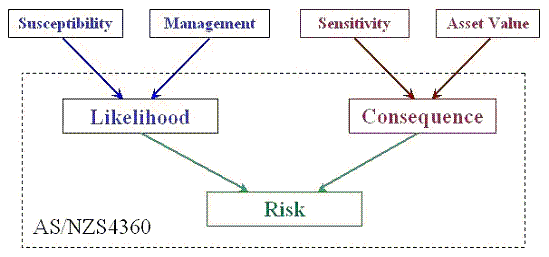
The Land Use Impact Model (LUIM) is a risk assessment framework for land degradation that has been developed as an extension to a GIS (ESRI). The conceptual design of the LUIM risk assessment framework is shown in Figure 1 below. The framework is based on the Australian and New Zealand Risk Management Standard (AS/NZS4360) defined by Standards Australia (Risk Management AS/NZS4360:1999)
The LUIM framework operates on land units (also called unique mapping areas) and assesses the risk posed by land degradation processes (such as soil erosion, soil structure decline, soil acidification, etc.) for land units.
Risk is determined through an assessment of Likelihood and Consequence:
- Likelihood is the chance of a certain level of land degradation occurring on a particular land unit. This depends on the Susceptibility of a land unit to the land degradation process under investigation (such as soil erosion) and the role that Management practice may play in causing, aggravating or moderating that process.
- Consequence is the anticipated impact that land degradation will have on a land unit should it occur. This depends on the ability of the land unit to maintain its function or productive potential if degradation occurs (Sensitivity) and on the value of the land unit in economic, environmental and social terms (Asset Value).